Saturday, May 16, 2015

Picture Perfect

To color or not to color. That is the question.

True, color photographs add a dimension to a book that black and whites can't. But also true, color photographs add cost. When the fly fishing book ended up 194 pages, the cost of publishing in color tripled over the cost of publishing in black and white.

Decisions, decisions, decisions.

To color or not to color.

We chose not.

To begin with, our book is about story, life stories of these twenty-eight men, not that color photographs wouldn't enhance their stories. But since several members of earlier generations had only black and white photographs, a fraction of the pictures would be in black and white anyway.

Cap Wiese

There is a certain air of distinction in old black and white photographs. The photograph of Cap Wiese came to us only in black and white, so we had no choice.

Cecil Harman


Look at these two photographs, the same ones of fly fisherman, Cecil Harman in Gunnison, Colorado...Black and white vs color.

When color is removed, you see the person and the story and not all the peripheral trimmings. It is almost a truer picture.

Well, that theory usually works. Look at the two versions of this photograph that didn't make the book in the end. It's of a group floating down the Green River in Utah. On the bank is a deer. 
See it? Or did you have to find it first in the color version?


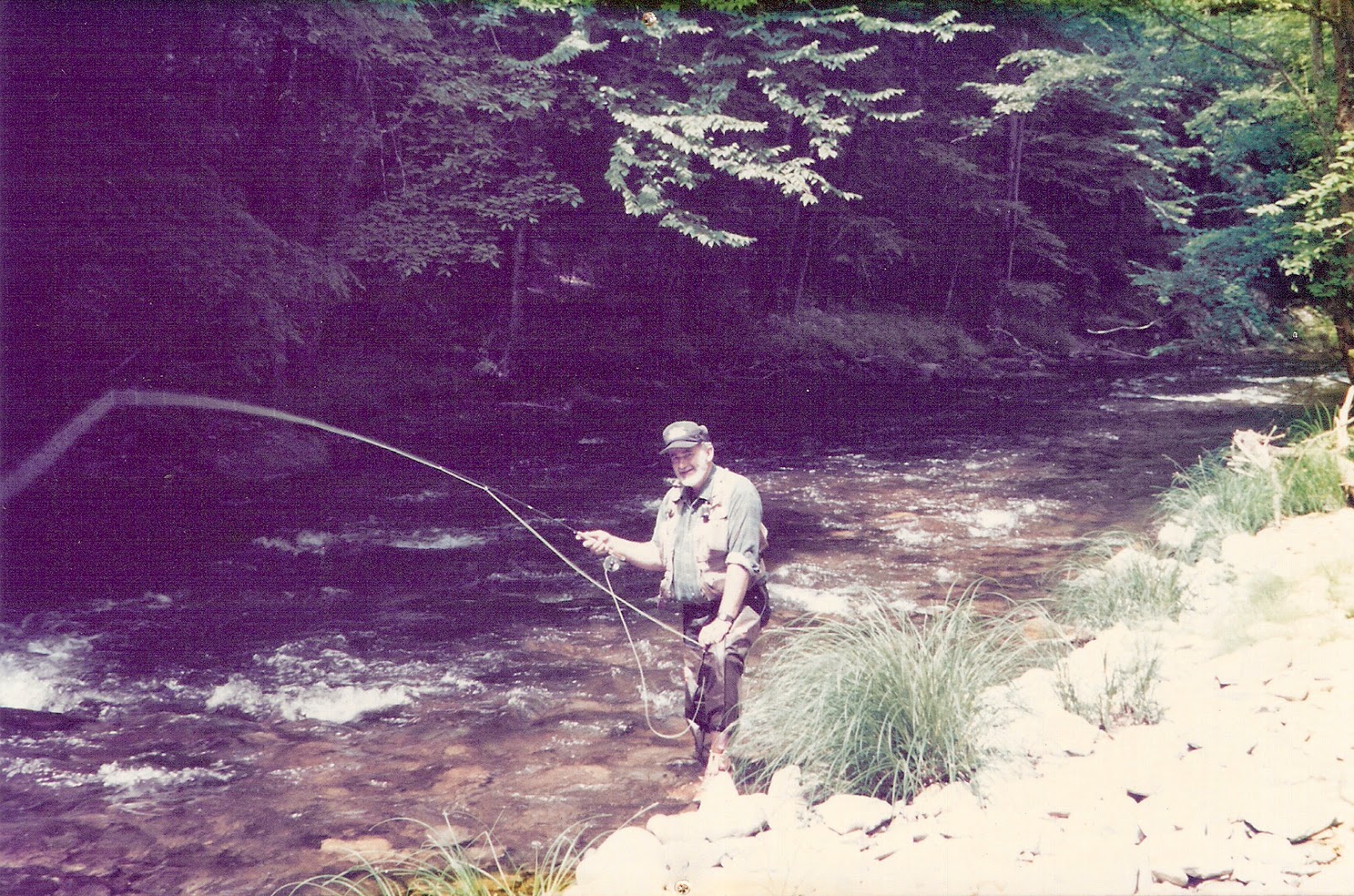
The overwhelming majority of photographs we used in the book are personal snapshots the fishermen had taken of them in action as opposed to professional portraits. We did that on purpose. We wanted organic, natural. That we got. Even the posed photographs of the men holding the catch of the day are Kodak Moment glimpses into the story of their lives. 

When it was all said and done, our decision was to keep the price at an affordable level, ten dollars. After all, the purpose of publishing this book was to tell the life story of these men. If the cost is extraordinarily high, then fewer people would purchase it. And fewer people would read it. And the stories don't get told.

These stories are too precious to sit on a shelf in a bookstore.

Just saying.

Catch of the day,

Gretchen


Saturday, May 9, 2015

Meet the Co-Author

Release day is getting closer and closer for Fly Fishermen of Caldwell County. We've even selected a subtitle that explains everything: North Carolina Life Stories. That way the reader isn't confused about what is in store. This is not a "how to fly fish" book. It is a collections of life stories about twenty-eight fly fishermen of the county where I live, Caldwell County.

For three years one of those same fly fishermen collected the stories (and wrote his own chapter). He visited. He made phone calls. He followed up on suggestions. He took a chance and stepped into his uncharted waters of writing a book. It's been a bumpy ride, but like the true adventurer he is, he sailed through with flying colors.

Let me introduce him to you.
Ron Beane
He brought the materials to me...raw materials in some cases. We interviewed a few fishermen and came up with chapters from those. We revised. We selected photographs. We debated style and format, details like font and placement on the page. We revised again. And again. And even with the final proof in our hands, we found issues that needed attention. Whew!

Each chapter starts with a profile of the fisherman, a list of vitals important to understanding the individual before the reader can continue. Here's Ron's: 
Favorite fishing rod - Winston 8′ 4 wt with either an Orvis Battenkill reel or a Ross reel with a 4 wt-forward air cell supreme fly line, and never with a tippet shorter than 9′
 
Favorite fliesWulff, the Beane Wulff and the Caddis flies sizes 14, 16, or 18
 
Favorite angling waters – Streams that are known for holding browns
 
Largest fish caught – In the 20″ plus class
 
Fishing partners - Son, Dr. Scott Beane, and his daughter and my granddaughter, Peyton Beane; Cap Wiese, Cecil Harman, and Joe McDade; Randy Benfield and Jim Childers

You know, important stuff.

After it was all said and done, we still weren't said and done. We had to insert the upfront and online info like key words for the search engines and author description. Here's Ron's:
  • North Carolina native, Ron Beane, is a former teacher, coach and school administrator. During his tenure as a Caldwell County (NC) Commissioner, a local stream, Wilson Creek, was designated as a Wild and Scenic River. Serving on the National Public Lands Steering Committee and the State of North Carolina’s Clean Water Management Trust Fund Committee gave him a greater appreciation for protecting natural resources and for passing on that passion to our younger generation “to pick up the mantle and carry on.” Through his love of fly fishing, he was fortunate to have met and fished alongside several extraordinary men with equally extraordinary life stories that he felt needed to be preserved. Fly Fishermen of Caldwell County, North Carolina is his response. Ron and his wife live in western North Carolina. They have two children and four grandchildren.

I can't wait for you to read the book, but be ready. Some chapters are real tear jerkers and some will have you rolling in the rivers.

Catch of the day,

Gretchen

Saturday, May 2, 2015

The Fly Fishing Museum of the Southern Appalachians

There's nothing quite like a relaxing afternoon with no obligations, no deadlines, just chilling. Just reading.

Add to that the May/June issue of a magazine, not just any magazine, mind you, but The Travel and Outdoors issue of WNC Mountain Living in Western North Carolina. 

Add to that, the guideposts segment on page 23, the "Spot for Timely Tidbits & Newsy Snippets," and on that feature page, an article, "Reelin' in the Years." Click over and take a look at the online version.

Yes, a fly fishing article.
Caldwell County native Joe McDade

There they were, two of the Caldwell County fly fishermen featured in our soon to be released book, Joe McDade and Charlie Bean. Actually we submitted the photographs a few months ago and I completely forgot about them, so the magazine came as a surprise, a treat for my relaxing moment.

Caldwell County native Charlie Bean
A third Caldwell County fly fisherman is in the article as well, Alen Baker, talking about the "pioneers of mountain fly fishing" and the need to preserve their stories. That's being done, not only in (have I mentioned it lately?) my upcoming book with Ron Beane, Fly Fishermen of Caldwell County, North Carolina, but also in a new museum, The Fly Fishing Museum of the Southern Appalachians. It's in Cherokee, North Carolina, next to the Cherokee Welcome Center on the banks of the Oconaluftee River. 

Alen Baker in action
This museum is not a "how-to-fly-fish" spot, although anyone browsing through it will no doubt pick up tidbits and newsy snippets to learn more about the sport. Rather, this museum is about the men (and I hope women) behind the rods, who they are, what motivated them, and yes, the flies they created.

Joe McDade in action
If you are looking for a great side trip this summer, might I suggest this, the Fly Fishing Museum of the Southern Appalachians.  Do drop in.

Catch of the day,

Gretchen  

Saturday, April 25, 2015

Catch of the Day

When I began this blog several years ago I titled it Catch of the Day, despite the strong cautions from fellow authors. It was my attempt to brand myself as a "Self-Proclaimed Storycatcher" as I say on the home page of my website.

"It's too much like fishing," they said.

"It will give the reader the wrong impression," they said.

"Your blog is about history, not fishing," they said.

But I held firm to the title, steadfast in my decision to share my adventures in catching stories. I took a class on writing nonfiction and after submitting a chapter, received this comment from the teacher:
  • Don't be afraid of your own voice! Any powerful historical account has a narrator weaving through it, negotiating and bringing to life all kinds of personalities. A story catcher still has to extract the story to get it out of her net. 

So I morphed into a being a storycatcher.

Fast forward five years and Ron Beane appears at my door with a box of manila folders in his hand. "Fly fishing," he begins.

"Okay," I begin. Make that a slow, drawn out, two syllable "O---kay."

And the fly fishing story begins. He had already caught most of the stories, he just didn't know what to do with them. Would I help him turn them into a book, he pleads.

Would I ever.

And that is the rest of the story.

Except that, isn't it peculiar that my blog title is Catch of the Day? Odd things, coincidences. Maybe there's more to the cosmos than I first thought.


Catch of the day,

Gretchen


Saturday, April 18, 2015

A Rooster in a Fly Fishing Book!

"Write what you know," my high school writing teacher told me over and over. "How can you possibly write what you don't know anything about?"

Decades later, I have an answer for her. Easy. You learn.

Case in point, fly fishing. Before I began this project I knew nothing about fly fishing beyond a pole and a creek. My misunderstandings about the sport far exceeded my knowledge. In fact, if I were to make a list of books I would write one day, fly fishing would be so far down the list I wouldn't work my way to it until I turned two hundred years old. Me and Methuselah.

Reality has a way of laughing, though. And I've laughed a lot these past few months.

To show you how much I didn't know about fly fishing, I thought it peculiar that one man submitted a picture of a rooster to include in the book.
Isn't he a dandy!
As beautiful and majestic as he is, he didn't make the final cut, so I'm posting him here, to give him his proper due. He's probably dead now anyway, a victim of circumstances. And no, it's not necessarily the elegant colorful feathers the man tying the fly is needing. It's the hackles, those neck feathers.

This fly fishing book is not a "how-to" book. It is a book of life stories of fishermen of the North Carolina county where I live, twenty-eight fly fishermen to be exact. Each man wrote his own chapter. The family of deceased fishermen wrote their chapters. Ron Beane and I complied them into a magnificent book of real life, introducing the reader to not only the sport of fly fishing, but the men behind the rod.

As I worked through the submissions I ran across several rooster references and gradually I became aware of why this rooster's picture showed up at my doorstep. From a fisherman's family:

  • We always had chickens and he kept the roosters. If he was out at work and he saw a rooster that had a pretty neck for the flies, he’d stop and try to buy it. If they’d sell it, he’d bring it home in the truck and he’d kill it, save the neck for its hackles and we’d have chicken and dumplings for supper.
Or from a fisherman himself:
  • We knew some guys who fought chickens, and several times after a “cock fight” they would bring us a dozen or two of the “losers.” We would skin the necks and dry them on boards. These necks had some of the best hackles we ever used in tying flies.
Or from another fisherman, as part of an interview I did with him, a picture I took of his hackle jar.

And his comment, that I sort of, kind of, maybe understand, but still wrote about:
  • I create a tail using the hackle off the side of a chicken feather and secure it with a second half hitch, running the string up the hook and back enough to cover the hook. 
I'm still in the process of learning about fly fishing. One thing I've learned beyond why a rooster picture was in the mix, it is possible to write what you don't know as long as the information is authentic. And in this book, YES. The information is as authentic as it gets.

I can't wait to share it with you.

Catch of the day,

Gretchen


Saturday, April 11, 2015

Wilson Creek

In case you haven't noticed, I've changed my feature photo from the schoolhouse to the creek. When I first began this blog, I was deep into the process of writing a book about Pilot Mountain School, so naturally I used the schoolhouse as the opening shot of my blog.

That was then.

This is now.

Today I'm up the creek, Wilson Creek to be exact. Isn't it beautiful! This photograph was taken by Bill Kincaid and now graces not only the top of my blog, but also the back cover of my upcoming book, the one that should be on the market within a month, the one that I would have never imagined I would be a part of.

More on that in future posts. Today's is about Wilson Creek, with another view in this photograph by Gene Swanson:


According to the Friends of Wilson Creek website, the creek has a storied past through floods and fires, and even industrial development that failed due to those floods and fires. In the end, it defied development. It remains what you see in this photograph.

A group of concerned citizens led a successful campaign to have it designated as a Wild and Scenic River. One of them is the co-author of our upcoming book, Mr. Ron Beane. Here's an excerpt from a chapter in the book:
  • During my tenure as a commissioner, one of the main projects was getting Wilson Creek designated as a Wild and Scenic River. Together with County Manager Bobby White, Commissioners Herb Greene, Alden Starnes, Larry Taylor, John Thuss and myself, we helped make it become a reality. The Wild and Scenic Bill for Wilson Creek was signed into law by President Bill Clinton in August, 2000. That process took twenty months to complete and sign into law, a very short time for such a project. We were told that the process could take from three to seven years to complete, and that our timetable for completion was unheard of. After the designation, we sought and secured funds to purchase approximately seven acres of property on Wilson Creek for a visitor’s center. The Wilson Creek Visitor Center opened in October, 2002. I was so happy to see the Wild and Scenic designation because I knew that it would protect this “Caldwell County Treasure” beyond my lifetime, and it would be something that many will enjoy years in the future. Wilson Creek has always been special to me and to many others who fish and swim and hike in the gorge area. 
Oh, and here's an excerpt from the back cover (Wilson Creek in the background):


I can't wait to show you the rest of the book.

Catch of the day,

Gretchen

Saturday, April 4, 2015

Easter Greetings

Greetings to my readers on the weekend of what I consider the most sacred of holy days, Easter.

I send Christmas cards. I send Valentines. I send birthday greetings via facebook. But I don't remember ever sending an Easter card. So consider it done. Today. Via this blog. And thanks to my husband's grandfather, who in 1917 sent this card to his Aunt Agnes:


This would be an Easter greeting blast from the past. After all, the true joy of Easter still holds strong almost a hundred years after this penny postcard was lovingly sent, so why not recycle to you.

This postcard fell into my hands, along with many, many more, because in the process of cleaning grandpa's house (I've mentioned that in previous blogs) we are also cleaning great-grandpa's house, the house that has not been touched for decades, the house where nothing (and I do mean nothing) was discarded through the ages. For days now, I have been existing in a time capsule. I've uncovered farmer's almanacs that have not seen the light of day since the early forties. I've held political letters begging for votes (and contributions) from pre-World War II candidates, and Viet Nam era candidates.

It's been rough being a history buff on a deadline. All I want to do is read, read, read. That is impossible, so instead I put things in the "Don't you dare throw that away" pile and dig into the next drawer. 

I can't read the postmark date on this card, but I can read the sentiment behind the greeting to Agnes and the invitation to "Come up here for Easter." A hundred years of Easters have come and gone since Agnes reached in her mailbox on the side of that country road and pulled out this card from her nephew. I know she was as thrilled to find it as I was.

I hope your holy days are blessed.

Catch of the day,

Gretchen