Saturday, February 28, 2015

Panel Discussion

I'm not at my home in the mountains today. I'm in the flat lands, the coastal plain, the warmer (hopefully) side of the great state of North Carolina. I'm at a book event, Book 'Em.  Check it out.

It's a wonderful event to attend as a reader, even more so as a writer as we exchange ideas and "war stories." The walls at Robeson Community College are lined with authors and table displays of their books. How a reader narrows down the hundreds of books to select what they can fork out to buy, I'll never know. Each must have his own method, his own taste in books and genre.

Speaking of genre.

This year I will be a part of a panel discussion with a group of like-genre authors as we talk about our books. Topic - Memoirs. Here's the scheduled sessions for 12:00:

  • SCOTT MASON, KEYNOTE SPEAKER, Emmy-Winning Host of The Tarheel Traveler - Tar Heel Traveler Eats: Food Journeys Across North Carolina 
  • MEMOIR WRITING Authors Mary Anne Benedetto, Darlene Eichler, Gretchen Griffith, Linda Phillips, Sandra Warren 
  • SUSPENSEFUL READING Authors Hawk MacKinney, Ann Onimity, Dirk Robertson, Alan Thompson 

Note that we are up against the keynote speaker and, not only that, another panel, this one by crime writers. Okay, so we can hold our own, as these topics do attract different audiences. Plus, we have a lot to offer. We each write in our own distinctive ways, using the tools that we have found through trial and error and plain old luck.

  • The list of questions we will address as we discuss memoir writing are pretty standard, who, what, when, why kinds of things. I could (and have several times) talk an hour alone. It was the "how" question, and not the usual "How did you do it?" Did you write it for the personal enjoyment of family and friends OR did you write it for both family & friends and the open market? How did that change how you wrote it and what you included?

Ah, the target audience. How did knowing who the readers would be affect the way I wrote? That one I've pondered.

As I wrote the Pilot Mountain School book, I was always conscious of how people would interpret the way I presented the community. I wanted the reader to know the reality, but I wanted the people who trusted me with their life stories to be satisfied that I was not sensationalizing the day to day poverty they endured or the many crises the school went through or the facts of life living in the south during desegregation. I made hard choices, not in what I included, because that could not be changed if I were to remain true, but in the way I presented the story itself. I went places in the book I didn't plan to go, dark places, but thankfully, places with light at the end of the telling.

If you are near Lumberton, North Carolina today, come on over to the community college and drop by my booth. At noon, step into the Red Room and listen to what we are discussing. It just might start you thinking about writing a memoir.

Catch of the day,

Gretchen


Saturday, February 21, 2015

Makers of History or Made by History

Yesterday when I was at the public library I saw a poster that stopped me and provoked me into thinking. Great posters, after all, are like great art. They uncover emotions, but most of all, questions that the viewer never realized he had.

On this particular poster was a quote by Martin Luther King, Jr. from his 1963 Strength to Love writing:

We are not makers of history,
We are made by history.

I've always thought the other way around, that we, as in everyone, make history. Coaches say it when the team goes on the field, "Let's make history!" CEO's say it in daily meetings. Editors say it in newsrooms just before press time. Orators say it at graduations. Parents whisper it in the ears of the children as they go off into the world.

But stop. Rethink that. Maybe we are made by history. 

Maybe I agree.

All those many people I interviewed for this Pilot Mountain book and the Called to the Mountain book and the Wheels and Moonshine book and the baseball field book that has yet to be completed, and another one that I've started, all those people were definitely made by the history of whatever surrounded them. There is more, however, more to their lives than the past.

Maybe I would like to debate this poster.

The past is what sets up the life of the person born into the community and of those who move there. That I will concede. 

But stop.

There's a human element, free will, a most wonderful element that gives us our humanity. Each person I interviewed took the cards that were dealt them, and went out and made a difference in the world. I must remember that as I sit across the table and listen to their stories.

They had choices. We have choices. We can embrace what surrounds us, or we, like them, can rise above, move away, succumb to, or hide in fear from it all. Which a person chooses is what makes history.  

It also makes great story.

Catch of the day,

Gretchen


Saturday, February 14, 2015

Valentine's Day 2015

Since my father-in-law passed away in December, my husband's family has been cleaning his house. We're clearing away the clutter, but we're careful to not wipe away the ninety years he existed. There is a big difference.

At first I vowed not to let this happen to my children. No way would they have to go inch by inch through my life, peeling back decades of collectibles. After hours going through boxes and cartons and shelves and drawers, I determined I would come home and do it myself to save them the trouble. Grandpa and Grandma (and now we're into great grandma's stacks) saved everything. EVERYTHING!

But wait. I'm learning one thing.

This is part of the healing process.

We have found letters our children wrote to their grandparents, even the thank you notes that I remember standing over them a couple days after Christmas, not letting them play with their presents any more until they officially thanked their grandparents.

A further layer down we found letters from us as newly weds, another layer down, my husband's letters home from college, cards he and his brothers sent their mother for Mother's Day, every year, every card. Deeper than that we found the cards from their childhood, the handmade Christmas cards they crafted at art class at school and the fifties style Valentines that only a boy could think of to send his mother. Like this one:
Isn't that a blast from the past!

I case you can't read it, the message in the hearts, after the Valentine Ho, reads I M 4 U.

We can't put our twenty-first century glasses on to read this. We must go back a century, back to when innocence counted. Back to when texting as we know it hadn't been invented. Back to life in the fifties, a different world that I'm rediscovering at Grandpa's every week.

Catch of the day,

Gretchen

Saturday, February 7, 2015

School Report Cards

This week the state of North Carolina released "report cards" on individual public schools, kindergarten through high school. The report card grades, ranked A to F, were based mostly on test scores and less on academic growth.

Hard work by dedicated teachers didn't factor in.

High poverty. No, didn't matter.

High income. No, didn't matter.

Specifically chosen students who were interviewed and selected to a school based on potential. No, didn't matter.

In my county, made up of schools with a cross section of excellence in both teachers and students, only one school received an A, the early college, made up of those specifically chosen students. The rest, mostly B's or C's and a couple D's, no F's, a slightly lopsided bell curve, if my statistics class lessons serve me right.

So what did this report mean?

It meant a lot of fuss when the report first came out. It meant no excuses accepted, no exemptions allowed. It meant surprised parents hearing their child's school scored so low. It meant discouragement for teachers who for several years, hard years, brought their school's test scores higher than the previous years through a lot of excellent teaching and many, many hours dedicated to the cause. It was a wake up for some.

Back in the seventies, when American schools were going through as many "new and innovative" changes that could possibly be introduced, I remember sitting with other teachers expounding on what will work and what won't work. Those were the days of the democratic classroom, when children had a "say" in their education. Those were the days of the "new math" where memorizing times tables was thrown out the back door, and the days of the "don't correct their grammar...it's the creativity that counts."

One teacher believed each student should be making straight A's. To accomplish this, he had the students do over and do over and do over each work sheet or activity until it was mastered. Good pedagogy in theory, one that I practiced to a point.

But this teacher went one step further. When the final paper was redone, he recorded the grade as perfect, a 100. As a consequence, a wonderful consequence if you were the child, when he averaged grades, everyone made A's. When the report cards went home, the parents were thrilled. The children were proud. Everyone was happy.

But was it reality?

Parents (and teachers) here in North Carolina realized this week that reporting achievement isn't the same as reporting progress. Their schools got a new report card.

Catch of the day,

Gretchen

Monday, January 12, 2015

Taps to Honor my Father-in-law

The greatest generation is dying off,  yet we knew this would happen. It's the natural order of life. Each death has been a remarkable loss, and worthy of noting, because with this generation goes an incomparable spirit of devotion and hard work.

Last week we buried one of their number, my husband's father, Wesley Newton Griffith, after his long and difficult two year journey with an enemy called Alzheimer's.

He grew up during the depression when living wasn't easy, then fought in the second World War. Part of his service to our country was in Oahu, Hawaii where he guarded ethnic Japanese who lived there on the island. The other part he served as a radio operator in a remote outpost on the island.

He returned home and tried to be normal after witnessing atrocities he couldn't explain and wouldn't reveal.

He and my mother-in-law raised three boys. They attended church on Sundays and put their faith into practice the other six days of the week. He worked long hours as an electrician in the tobacco factory and hurried home to work long hours in the garden before dark set in. He watched his children attain levels of education he was denied...because of poverty...because of war service.

He cheered for the grandchildren now that he was retired and could attend ball games, finally. He lost his beloved wife of over sixty years and worked through his grief in the garden and at his kitchen table studying his Bible lesson.

During the dark, lonely days of winter, he wrote a book. Handwritten. Fifty-seven pages. Took it to Staples where they printed four copies. When the grandchildren hinted they wanted copies, he returned to Staples and this time had a hard back edition printed. Ten copies. Limited edition.
The cover of his book featured their wedding picture
 August 1943
He titled it Favors, referring to Proverbs 8:35

 For who finds me, finds life and shall obtain favors of the Lord.

The service at the church fit him well. His children and grandchildren honored him by their mere presence. The country honored him with a military graveside ceremony. 

And then came Taps

Taps, the "All is well" reminder that we as a family so much needed to hear. Through our tears we said our final goodbyes to a great man, our final connection to this generation. 

"Well done, thou good and faithful servant." Matthew 25:21.

Catch of the day,

Gretchen


Monday, December 15, 2014

Author Visits

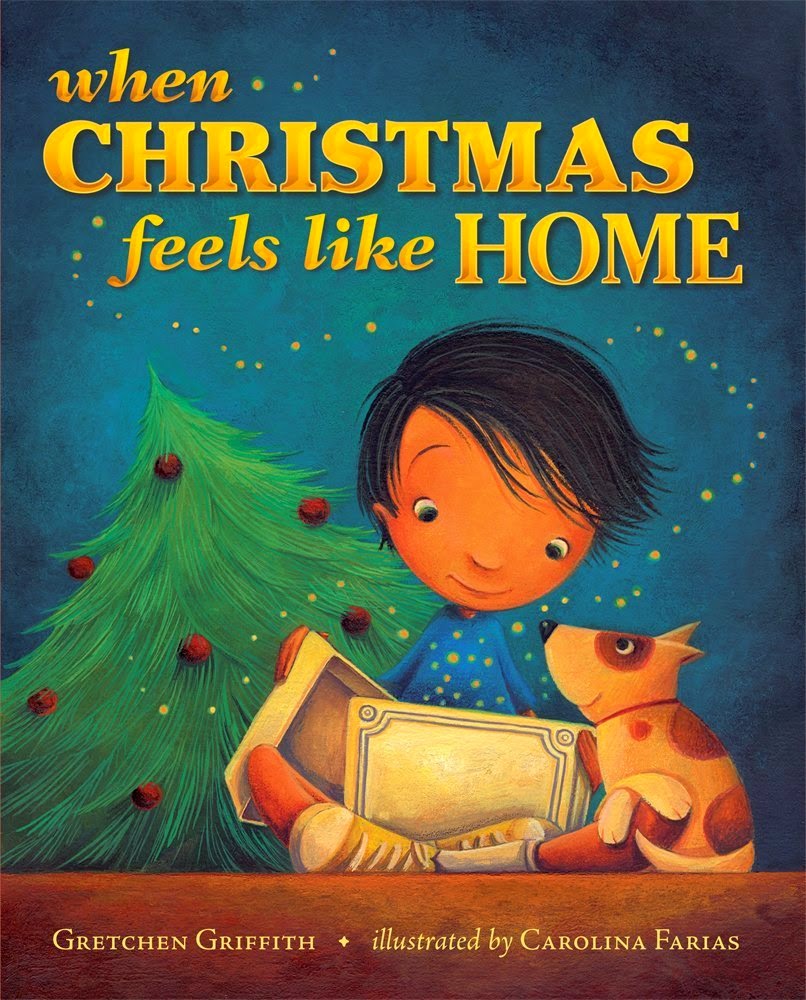
'Tis the Season. (Since my book is a Christmas book)

For author visits. (To talk about my Christmas book)

Got one tomorrow. (Because Christmas is near)

I'll be sharing and talking with fourth graders about my writing process...and my book.

I've been to several schools this season, each offering an experience so delightful I almost feel like going back to my first career love, teaching. (Almost!) I miss the children, their joy and curiosity, even their crazy, out of context questions. I miss eating in the lunchroom where a bit of reality is served up daily. I miss watching the light bulb moments when a child understands a concept we've gone over and over and over and then ka-boom, he gets it. 

Last week I went to a school in a nearby county. The fifth graders had prepared welcome signs that were displayed in the hall. I read every one and I signed a thank you note on each poster. What fun. These children had visited me before I ever arrived...imagine that. They had gone to my webpage during computer lab class and read through it as a lesson. They played with my interactive page where I reveal my messy desk and the tools I use as I write. Check it out here. There's a hidden gem in the picture, so see if you can find it. 

By the time I walked into the gym, those students were ready to visit as old friends. I was ready for them and they were ready for me.

Advice to other authors, be prepared. Take a water bottle just in case. Dress in layers. I visited in classrooms in a school where I was cold in one room and burned up in another, depending on how far away from the ancient heater the room was. Be familiar with the writing objectives the teachers are required to follow because this is your chance to reinforce them. You are the example they will use the next time they teach a concept.  Most of all, enjoy the day and appreciate the privilege of meeting readers up close and personal. 

Catch of the day,

Gretchen


Tuesday, December 2, 2014

Retro Toys

Between all the Black Friday, Small Business Saturday, Cyber Monday sales pitches going on, I heard a still small voice speaking about toys of the past making a comeback. Some have never left, the yo-yo, dollhouses, bicycles, although each of those have updated versions, new etch-a-sketch.

New and improved Chatter Phone by Fisher-Price. Modern children might not know what it is for or how someone would ever use it, but it still is for sale, still fun to them.


One toy I didn't see in the video is the one that drove the teachers at Pilot Mountain School rather crazy.

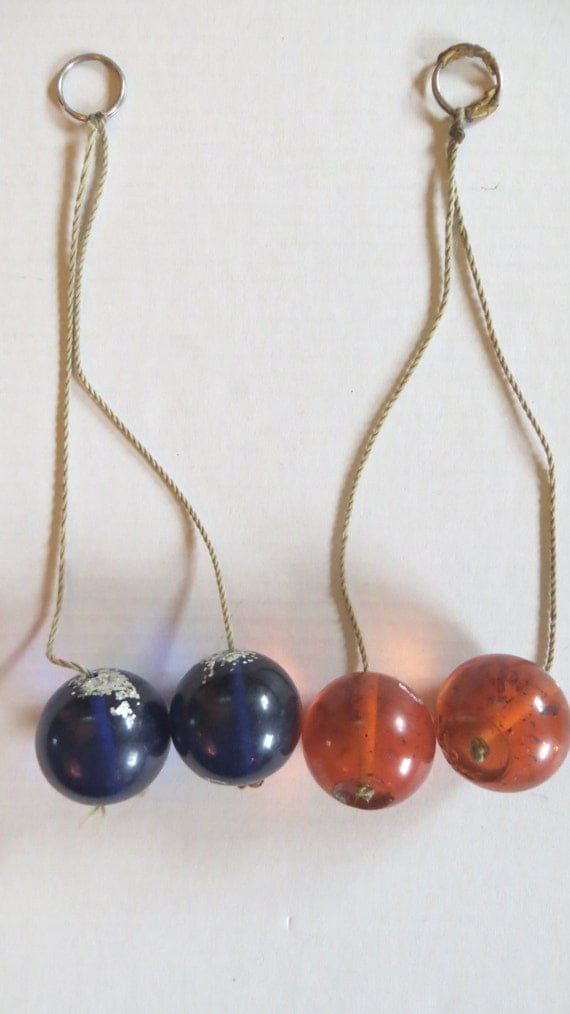
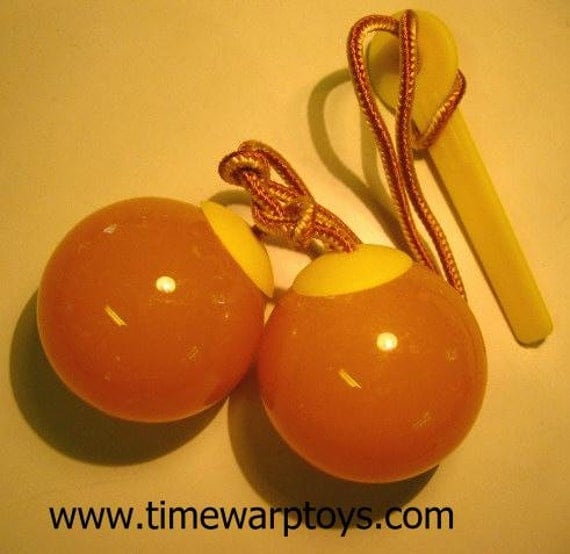
Clackers. Study them well, because I would bet they will never become a retro toy on the market. What were we thinking?

They don't look like much, sitting there so innocently, balls on a string, just the right weight to give a solid bang when they collide. Yet given over to the hands of a sixth or seventh grader of the sixties, they came alive. They spun in orbit and clacked together at the other side. Or they clomped up against someone's head. Then they clacked some more. And more. 

Homemade versions of this toy just didn't work because the sound that drove the teachers crazy just wasn't the same. From an interview of a student:
  • Something came through here called clackers. It was a ring with a string and a ball on each end. You went pow, pow, pow, pow. Two clear plastic balls, you tried to get them going fast enough and you’d hear it. The clacking. The teachers got tired of that after a while and they banned them.

And teachers today think they have it so rough!

Catch of the day,

Gretchen